Posted on

2 Ways to Make Ginger Extract for Brewing

Written By Kyle McQuillen and Craig Reavill, R&D Chemists at Treatt

There are a number of ways to extract flavors from natural ingredients; the most practical for homebrewers are:

  • Boiling: simmering with sugar to make a sugar syrup extract
  • Hot water soaking
  • Cold water soaking, then pressing
  • Steeping in high ABV spirits
  • Steaming or pressure cooking

The name of the game when creating extracts is to expose as much of the surface area of the fruit, vegetable, spice or flower as possible, to maximize extraction. This can be done by finely chopping, grating, bruising or crushing.

With ginger root, two of the best methods are steeping in high ABV spirits and simmering with sugar to create a syrup based extract.

Ginger is a unique flavor source. It is pungent and spicy and can add a nice complexity to many styles of beer. Ginger is the underground rhizome of the Ginger plant (Zingiber officinale). It has a firm texture and is quite fibrous, which can make it a challenge to work with. Making a ginger extract can be labor intensive but the end result is worth the extra effort. Below are two methods of making a ginger extract at home:

  1. Alcoholic extract: produces a clean ginger flavor with little to no heat
  2. Syrup extract: provides a spicy yet flavorful extract

Ginger Alcoholic Extract

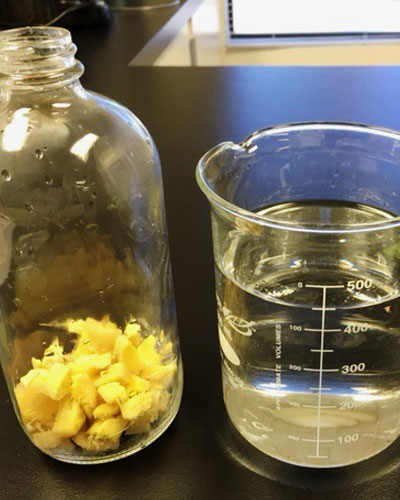
  • 450 ml vodka (minimum 40 percent ABV (although the higher the better)
  • 45 g fresh ginger root (after peeling and slicing)

Peel the ginger and slice fine enough to fit through the neck of a suitable bottle.

Add the vodka and shake twice daily (minimum) until desired flavor intensity has been extracted. The longer you let it sit, the more intense the flavor becomes.

2

This should take between two and six weeks depending on taste preferences. It should then be filtered to remove all the ginger and small plant fibers. For filtration, cheesecloth, coffee filters or even hop bags will suffice.

extract

Using Ginger Alcohol Extract in Brewing

Volumes can be adjusted—ginger should be used at 0.1 g per ml of vodka. This alcoholic extract provides a clean and fresh ginger flavor with little heat. Dosage rates of extracts will vary widely depending on many factors, including the style of beer, IBUs and quality of bitterness in the beer. Start at very low dosage rates in your beer and work your way up to find the desired flavor profile. With this extract, we would recommend starting at 1000ppm (0.10 percent) by volume post-fermentation and working your way up from there.

extract

Ginger Syrup Extract

  • 500 ml water
  • 50 g fresh ginger root (after peeling and slicing)
  • 100 g sugar (sucrose)

Peel the ginger and bruise (with a rolling pin or similar) to rupture and expose fibers, but not too much to prevent the release of small fibers into the solution.

extract

Place into a saucepan with the sugar and add boiling water. Simmer for 30 to 45 minutes or until the volume has reduced by about half.

extract

The bruised roots will look slightly darker and slightly mushy or slightly cooked. The solution will turn a deep golden color. Cool, then filter and store in the fridge—use within two days.

extract

Using Ginger Syrup Extract in Brewing

Since the ginger is exposed to heat, this syrup extract provides a hot, full-on, yet sweet ginger flavor. This is because Gingerol, a major component of Ginger essential oil, is converted to a compound called Zingerone, which is sweeter than Gingerol but still provides spice to the extract. Again, dosage rates will vary, so add a very small amount to your beer and work up from there. The “spent” bruised ginger can be used for cooking for those culinary-minded people—it tastes great!

extract

It’s worth noting that the syrup extract will provide fermentable sugars. It can be added straight into the fermentation vessel, just before pitching the yeast and the flavors can mature with the brew. Although depending on the strain of yeast used, the flavor profile of the extract could be altered due to biochemical transformations initiated by our favorite microorganism.

The other way to use the syrup extract would be to add it post-fermentation, either in place of the priming sugar when bottle conditioning or after cold crashing when kegging the brew.  With a specific gravity of approximately 1.151, this will slightly increase the final gravity of your beer.

The extracts above are very simple to make and extremely powerful. With ginger, your method of extraction will depend on if you want that extra heat in your beer. The syrup extract will pack quite a punch, so be conservative when adding to your beer. You could even go all out and use them in combination, adding the syrup extract pre and or post fermentation, as well as the alcoholic extract to enhance the final top note, thus giving the full spectrum of ginger to your latest creation.

Sources

Connel, DW and Sutherland MD. A re-examination of gingerol, shogaol, and zingerone, the pungent principles of ginger.” Australian Journal of Chemistry 22-5 (1969): 1033-1043.

Phung, Alice. “Ginger.” https://scienceandfooducla.wordpress.com/2014/09/30/ginger/. Science and Food. September 30 2014.


About Treatt

Treatt is a specialist ingredient solutions provider that offers a wide portfolio of natural essences and extracts to the craft beer market, including citrus oils and its range of 100-percent natural Treattarome distillates made up entirely of FTNF ingredients. Treatt partners with its customers to develop new flavor combinations formulate blends and conduct taste trials. It has pilot breweries in both the U.S. and UK to further study brewing science and identify new ways for Treatt to provide value to brewers.

We look into the what, why and how of using natural extracts in brewing on our website TreattBrewSolutions.com take a look to find out more!

The post 2 Ways to Make Ginger Extract for Brewing appeared first on American Homebrewers Association.


Posted on

AHA to Host Second Annual Capitol Hill Staff Homebrew Competition

On December 3, 2017, the American Homebrewers Association (AHA) and the Brewers Association (BA) will hold the second annual Capitol Hill Staff Homebrew Competition, bringing together Republicans, Democrats, and other staffers in a friendly competition.

When asked about the purpose of the competition, AHA Director Gary Glass stated, “This competition, open to legislative staff and other federal employees on Capitol Hill is a fun non-partisan outlet for the Hill staff, while helping to increase awareness of and appreciation for homebrewing with this influential group.”

There are 16 entries in a variety of beer styles that will be judged on their own merits and against each other. Category winners and a Best of Show recipient will be announced by members of the House and Senate Small Brewers Caucuses, alongside BA President & CEO Bob Pease, at the Capitol Hill Tasting event on December 12, 2017.

New this year, the highest-scoring beers of the House and Senate will go head-to-head and the winner will be announced during the awards ceremony with a trophy presented to the Chair of the winning Small Brewers Caucus.

2016 Hill Staff Competition winners Chris Anderson and Matt Buckham of Senator Bill Cassidy’s (R-Louisiana) office

“The Capitol Hill Homebrew Competition brings together and celebrates the homebrewers on Capitol Hill in a fun and friendly way, celebrating the roots of the small and independent craft beer movement in this country,” says John Moorhead, AHA Competition Organizer and manager of the competition.

See the official press release on BrewersAssociation.org.

The post AHA to Host Second Annual Capitol Hill Staff Homebrew Competition appeared first on American Homebrewers Association.

Posted on

Quarterly Homebrew Supply Shops Survey

[This article is an excerpt from the “From the Glass” column featured in the November/December 2017 issue of Zymurgy magazine. Join the American Homebrewers Association to subscribe to Zymurgy and gain access to the archives.]

If I haven’t told you this recently, I really appreciate your membership to the American Homebrewers Association! There’s more to the AHA than Zymurgy magazine, AHA Member Deals, our events, and all of the great benefits the AHA offers to members. Your membership dollars help ensure the AHA, an association proud to advocate on behalf of homebrewers worldwide, will be around for the long haul.

You may not be aware that the AHA conducts both an annual survey and four quarterly surveys of homebrew supply shops. We do this to help us track the health of the hobby and to help shops understand the market. No one else is doing this kind of work.

Following annual declines in gross revenue of two percent in 2015 and one percent in 2016, our data for the first half of 2017 show that shops in general saw modest declines in gross revenue of 3.4 percent and 2.2 percent, respectively, for the first and second quarters relative to 2016 revenue. When looking just at brick-and-mortar stores (i.e. not primarily online businesses) that have been open five or more years, the picture is somewhat worse, with declines of 6.1 percent and 7.7 percent, respectively, for the first and second quarters of 2017, meaning that online retailers and newer brick-and-mortar stores are faring better than long-established brick-and-mortar stores.

Support Your Local Brew Shop

Find a homebrew shop nearest you and help support the business that support homebrewing!

Find a Shop

At the individual shop level, there could be a wide range of reasons for sales performance, but generally speaking, fewer customers are buying from homebrew supply shops, existing customers are purchasing less, or some combination of both is responsible for the declines in revenue.

I think of the local homebrew supply shop as the focal point of the local homebrewing community. Those shops play a critical role in keeping our hobby alive and introducing new people in our communities to homebrewing. If you have a shop in your area, consider the impact on the homebrewers there if your local shop were to close. We’ve seen a number of shops close over the past couple of years, so the threat is real. With that, I ask you all to please support your local homebrew supply shop!

* * *

Gary Glass is director of the American Homebrewers Association.  

The post Quarterly Homebrew Supply Shops Survey appeared first on American Homebrewers Association.

Posted on

Julio/Agosto Zymurgy

Los siguientes artículos los pueden encontrar en la edición julio/agosto de la revista Zymurgy. Para ganar acceso como un miembro, asociate con el American Homebrewers Association.

Exclusivos

Las mejores cervezas en los Estados Unidos
Por Jill Redding y Amahl Turczyn

Hace 15 años que los lectores de Zymurgy votan por sus cervezas favoritas del país, y por primera vez desde 2009, hay una nueva cerveza en la cima. ¡Ven, pescadito, pescadito, pescadito!

Revisión del refractómetro
Por Petr Novotný

El refractómetro siempre fue bueno para medir la densidad original. Estos métodos actualizados también sirven para medir la densidad final y todo lo que haya de por medio.

Elaboración de cerveza casera ultraligera: un análisis de tres partes

La falta de tiempo es la principal excusa que tienen los cerveceros caseros para no elaborar cerveza con la frecuencia que quisieran. En este artículo especial de tres partes, Clint Cherepa, Chris Colby y Matt Smith nos motivan a elaborar más cerveza en menos tiempo y con menos artefactos.

Columnos/Departamento

Espacio del redactor
Por Dave Carpenter

Desde la Perspectiva de Glass
Por Gary Glass

Un Mundo de Mostos: A Gotland por Gotlandsdricke
Por Charlia Papazian

Enfoque en Ciertos Tipos de Cerveza: Ales Escocesas
Por Amahl Turczyn

The post Julio/Agosto Zymurgy appeared first on American Homebrewers Association.

Posted on

2017 Battle of the Bottle Labels Winners

Sixty-three entries were submitted to the 2017 Battle of the Bottle Labels, with 15 advancing to the final round where 1,000 people cast votes for their favorite designs. The lucky finalists were competing for the title of Battle of the Bottle Labels champion and prizes from the competition sponsor, Grog Tag.

We’d like to thank all the homebrewers/artists who submitted beer bottle labels to this year’s competition, as well as Grog Tag for donating two badass prize packages for the champion and runner-up.

Now, without further ado. The winners of the grand prize and runner-up prize packages are…


Grand Prize Winner

  • Name: Burç Taluğ
  • Location: Istanbul, Turkey
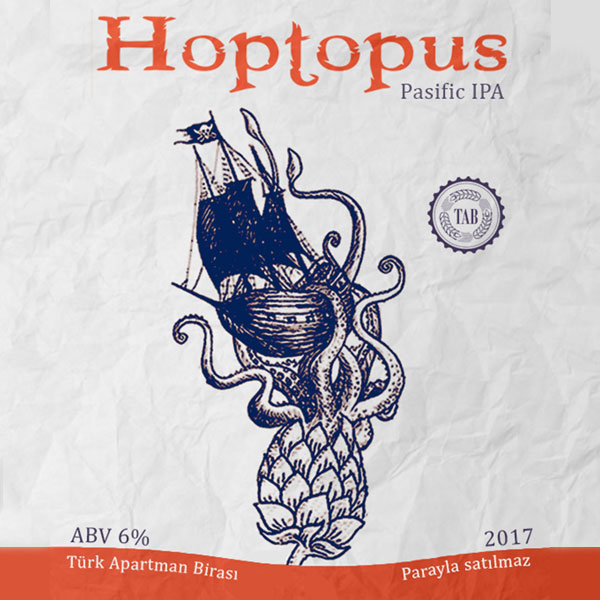
  • Beer name: Hoptopus IPA

Burç Taluğ’s homebrewing journey all started at his neighborhood pub in Istanbul. The local watering hole specialized in imports, introducing beer drinkers to interesting alternatives to the mass-produced lagers of Turkey. After trying Trappists, stouts, and other ales, Taluğ began exploring more about beer styles and the brewing process, which all led to homebrewing.

In January 2017, Talug and his wife brewed Hoptopus IPA, an American-style India pale ale that earned second place in a Turkish homebrewing competition. The dominating character from the hops was the inspiration behind the “Hoptopus” label design. Talug even has a name for his home brewery: TAB (Turkish Apartment Brewery)!


Runner-Up

  • Name: Arrian Brantley
  • Location: Spring, Texas
  • Beer name: Llama Spit IPA

When Arrian Brantley first started homebrewing, he jumped in headfirst and went straight to kegging. But as Brantley started running out of empty kegs, he decided to start bottling. Bottles offered an easy way to share his homebrewed creations with friends, but the masking tape labels just weren’t cutting it.

Riffing off a llama-based inside joke, Brantley came up with the Mad Llama Brewing name and began designing ideas for the logo. Realizing he couldn’t draw a realistic llama, he went with a cartoon version. After a few sketches, Brantley refined the idea in Adobe Illustrator and brought his homebrewery brand to life. “My plan is to use it for things in the future, like glasses, signs, and shirts,” says Brantley.

The post 2017 Battle of the Bottle Labels Winners appeared first on American Homebrewers Association.
Posted on

Save the Date: 2018 National Homebrew Competition

It’s fall—that means it’s time to start thinking about the 2018 National Homebrew Competition (NHC)!

You can find all the current 2018 information, including important deadlines, on the NHC main page. Please make sure to read the updated Rules & Regulations, which also contain the National Homebrew Competition styles that are reorganized from the 2015 Beer Judge Certification Program Style Guidelines. For more specifics on styles, please reference the BJCP Style Guidelines for beer, mead, or cider. The Online Competition Application opens January 23, 2018 and runs through January 30, 2018. Mark your calendars!

Keep an eye on the NHC main page for more specific dates and other information to be announced before the end of the year.

Update Your Club Info

If you’d like your club to compete for the NHC Homebrew Club Award and the Gambrinus Award, check to see if your club is in our club database and that the information is correct. If not, make sure to register or update your club’s information by midnight, December 31, 2017. Club registration with the AHA is free.

Access Past National Homebrew Competition Recipes

Did you know American Homebrewers Association (AHA) members get access to the gold medal recipes from past National Homebrew Competitions? HomebrewersAssociation.org hosts all gold medal-winning NHC recipes through 2005, and members have access to older competition recipes through their exclusive access to the Zymurgy digital archive. These beer, mead, and cider homebrew recipes are among the best in the world!

The post Save the Date: 2018 National Homebrew Competition appeared first on American Homebrewers Association.

Posted on

Special Holiday Offer: AHA Membership Gift Card + Free Gift

Are you looking for the perfect holiday gift for the discerning beer lover and/or devoted beer geek? Are you searching for a present that will win praise, gratitude and high-fives—this season and for months and years hence?

Look no further, thoughtful person! An AHA Membership Gift Card provides 365 days of beery benefits!

The post Special Holiday Offer: AHA Membership Gift Card + Free Gift appeared first on American Homebrewers Association.

Posted on

Brew & Bites: 5 Thanksgiving Recipes & Beer Pairings

The Thanksgiving table is a complex place filled with diverse flavors that make it the immense feast that it is. It can be overwhelming to come up with a perfect pairing that melds together all the dynamic flavors of a meal, but according to Julia Herz, Craft Beer Program Director at the Brewers Association, a well-done Belgian tripel can handle all the aspects of the big dinner. The carbonation of this Belgian style can lighten the meal, while the higher alcohol level cuts and complements the many flavors that rest on your palate.

You can also select pairings for specific dishes in your Thanksgiving feast. We’ve pulled a few recipes for your Thanksgiving menu that you can try pairing with some of your stashed-away bottles of homebrew, or perhaps they’ll inspire you to brew one for next year’s feast.

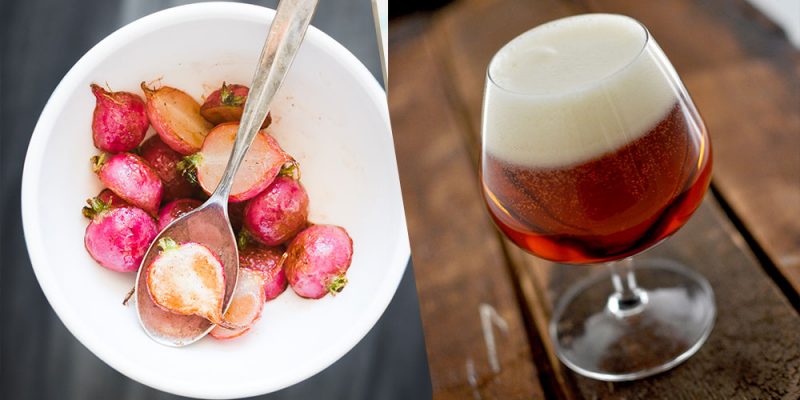
Braised Radishes & Belgian Flanders

thanksigiving beer pairings

When people think about preparing radishes, the conventional thought process is that you’d dice it raw and throw it in a salad, garnish a dish for texture and a spicy zing, or pickle it for an acidic punch. Braising radishes, on the other hand, brings out an earthier and less bitter version of the root vegetable. Try pairing this side dish with a Belgian Flanders red ale. The complexity of flavors in the Flanders, particularly the higher-than-usual acidity and sweetness, helps bring out those underlying bitter and spicy flavors in radishes that brought you to choose them in the first place.

Ingredients:

  • 3 bunches of radishes, quartered
  • radish greens: destemmed, washed and cut
  • 2–3 garlic cloves diced
  • ½ white onion, finely diced
  • chicken or vegetable broth
  • salt
  • pepper
  • apple cider vinegar
  • flat leaf parsley

Directions:

Step 1: Sautee onions and garlic in butter until the onions become translucent. Add a little bit of broth to simmer with the onions and garlic in the bottom of the pan and add the cubed radishes. The radishes should begin to turn slightly translucent as well. Allow radishes to simmer, add a splash of apple cider vinegar and a healthy shake or salt and ground pepper.

Step 3: Throw the washed and de-stemmed greens in at the last minute and stir until lightly wilted. Serve with fresh flat-leaf parsley for garnish.

Chèvre Mashed Potatoes & Blonde Ale

mashed potatoes beer pairing

Everyone likes cheesy mashed potatoes, but adding a creamy chèvre to your taters adds a whole new dimension. The flavor profile of goat cheese is quite different from that of cow cheese, so unripened and unaged aspects of the chèvre really stand out when combined with the less complex potato. The malty sweet and bready aroma of a blonde ale would pair particularly well with the mild, lactic flavor that the goat cheese imparts in these potatoes.

Ingredients:

  • 2 ½ lb. potatoes, quartered (Russets or Yukon golds with or without skin)
  • ½–3/4 cup chicken or veggie stock
  • 4 tablespoons butter, melted
  • 1 oz. chèvre of your choice (I prefer an herbed chèvre, but plain or spiced chèvre will work just fine)
  • 2 tablespoon salt
  • ½ tablespoon pepper

Directions:

Step 1: Boil 1 gallon of water in a large pot with 1.5 tablespoons salt. Boil potatoes for 15–20 minutes until you can cut through them with ease. Drain the potatoes.

Step 2: While the potatoes are boiling, mix butter with chicken stock. Use more chicken stock if you want your potatoes creamy and use less if you’d like them thick.

Step 3: Once the potatoes are well cooked, mash them. I prefer to use an immersion blender to mash my potatoes, but if you don’t have one, a potato masher will work just fine. After the potatoes are initially mashed, begin adding the hot butter and stock to the potatoes and continue mashing. The potatoes should start to emulsify into a creamy texture, at which point you should add the chèvre. Add as much or a little as you see fit (it’s important to keep in mind that the dryness of the goat cheese can make your potatoes less creamy, so don’t overdo it, depending on your desired result: creamy or chunky?). If you can’t find herbed goat cheese at the store, I recommend adding in some ground thyme and rosemary, too. Add the salt and pepper, stir until the potatoes reach the desired texture, and enjoy.

Turkey Dry Rub & American Pale Ale

thanksgicing turkey beer pairing

Some people brine their turkeys, but that takes some foresight, so try a dry rub instead. You still get loads of flavor and you’ll save a little time, too. The balance of malt and hops in an American pale ale is a great choice for a dry-rubbed turkey since the bitterness of the beer is just enough to cut fattiness in the poultry. An APA is also a great choice for cutting heat and enlivening the flavors of the spices in the rub.

Ingredients:

  • 1 tablespoon paprika
  • 1 tablespoon brown sugar
  • 1 tablespoon chili powder
  • ½ tablespoon onion powder
  • ½ tablespoon garlic powder
  • ½ tablespoon ground black pepper
  • ½ tablespoon Aleppo chiles (or other flaked mild chile)
  • 1 dash ground Himalayan sea salt
  • dash cinnamon
  • dash ground ginger
  • dash cayenne
  • 1 lemon

Directions:

Place the spices in a bowl and mix until well blended. Before applying the rub with your hands, mix olive oil and lemon together to coat the outside of the bird and help the rub stick.

Pumpkin Cake with Lavender-Cardamom Buttercream Icing & American IPA

thanksgiving dessert beer pairings

This pumpkin cake with buttercream icing is nothing short of decadent. It’s also a great alternative to your standard pumpkin pie dessert you see at so many Thanksgiving dinners. So many flavors go into this recipe from floral notes in the lavender to spiciness in the nutmeg that selecting one beer to go with it could be a challenge. An American IPA would be an excellent pairing for this slice of heaven because the bitterness in the style balances out the fat in the creamy icing, plus the residual sweetness of the malt tones down the zing of sweet in the cream and sugar.

Frosting Ingredients:

  • 4 cups confectioner’s sugar
  • 1.5 tsp. vanilla extract
  • ½ cup softened coconut oil
  • 3 Tbsp. milk
  • 8 Tbsp. softened butter
  • zest of 1 orange
  • 1 tsp. salt
  • 1 tsp. ground cardamom
  • 1.5 tbsp lavender sugar (If you can’t find this, feel free to just add lavender flowers as garnish)
  • ½ cup lightly toasted pecans

Pumpkin Cake Ingredients:

  • 2 cups all-purpose flour
  • 1 ½ cups brown sugar
  • 15 oz. pumpkin or winter squash puree (acorn, kabocha, butternut, jarrahdale, etc)
  • 1 cup vegetable oil
  • 3 eggs
  • 2 Tbsp. cinnamon
  • 1 Tbsp. lavender sugar
  • ½ Tbsp. nutmeg
  • ½ Tbsp. ginger
  • 2 tsp. baking powder
  • 1 tsp. baking soda

Frosting Directions:

Step 1: With an electric mixer, whip butter and coconut oil until creamy.

Step 2: Slowly add vanilla extract and confectioner’s sugar in 1-cup additions.

Step 3: Carefully add the milk based on how thick you want the frosting to be. Once you’ve reached the desired texture, add lavender sugar, salt, cardamom, and orange zest. Store in the refrigerator to thicken for a few hours and then apply to baked cake.

Pumpkin Cake Directions:

Step 1: Preheat oven to 425°F. Half squash and remove the seeds and stringy fibers. Put about ½ inch of water in Pyrex baking dish and place the squash face down, skin up. Roast the squash until soft enough to slice with a fork. Scoop all roasted squash out and discard the skin. Use an immersion blender or food processor to puree until smooth. I recommend doing this the day before you plan to make the cake.

Step 2: Preheat oven to 350°F. Grease a 9×13 inch baking pan (glass baking dish works, too) with butter.

Step 3: Place all dry ingredients (including spices) in a medium mixing bowl and stir until well blended. Set aside. In another medium-sized bowl, mix eggs, squash puree, vegetable oil, and vanilla extract together and set aside.

Step 4: Slowly add wet ingredients to dry ingredients and whisk together until smooth. Add the batter to greased baking pan and bake for 30–45 minutes depending on your oven. Let cake cool and apply lavender-cardamom buttercream icing. Lightly toast diced pecans in butter. Top the cake with lavender flowers and roasted pecans (optional).

* * *

Hailing from the South, Millie Shamburger has developed an affinity for the beer industry and all the shiny things that come with it. When not exploring beer, Millie is in the kitchen, enjoying the outdoors, & wearing out her dancing shoes. 

The post Brew & Bites: 5 Thanksgiving Recipes & Beer Pairings appeared first on American Homebrewers Association.

Posted on

The Balancing Act: How to Make Hoppy Cider

We’d be fools to think hop madness wouldn’t come full circle into other areas of home beverage making. Hop wine, anyone? Eh, maybe not. But, dry-hopped cider is all the rage, and cidermakers far and wide are trying to find that delicate balance between hoppy aromatics and apple sweetness. Lucky for us, making cider takes close to no time and dry hopping is a bonus for another day.

I chatted with a couple of experts on the topic of dry hopping cider from Colorado Cider Company, Stem Ciders, and Yakima Chief – Hopunion (YCH) to gather their collective insight on making a balanced dry-hopped cider.

Hop Selection

It all starts with picking the perfect hop variety to complement your cider. Ian Capps at Stem Ciders emphasized that very few IBUs will be extracted since cider must (the term for unfermented cider) is typically not boiled. In other words, the hops will primarily contribute flavor and aroma, just as is the case when dry hopping—adding hops during or after fermention—beer.

Capps likes to pair a particular hop characteristic with a fruit: think Citra-hopped cider with some fresh grapefruit puree. At Stem, they focus mainly on fruity and citrusy hops like Cascade and Citra that are less dank, so that the apple flavor of the cider is not masked. That feeling was widespread, with both Colorado Cider Company and YCH saying they also prefer to use hops with a fruity or citrusy profile when dry hopping cider. In fact, YCH says their cidermaker clients tend to stick with Citra® and Mosaic®.

Hops typically come in whole-leaf form or as compressed pellets. Either can be used for dry hopping, though whole-leaf hops are often avoided since they absorb more liquid and have less contact area with the beer, which requires more agitation to get the full potential of the aromatics. YCH recommends their LupulN2® hop pellets, which have less vegetal material than cones and allows for emphasis of the fruity characteristics.

how to make cider

Hop Additions

Dry hopping cider (or beer for that matter) is a bit of a guessing game. Depending on when the hops are added to the fermenter, how much is used, and how long they are soaked will all determine the amounts of aromatics that are imparted in the cider. Colorado Cider Company typically adds hops when the cider is room temperature and has experimented with dry hopping for anywhere from 7 to 21 days. Others have had success with even fewer days. In fact, Capps says to be wary of soaking them for too long, which can add vegetal qualities that aren’t typically desired.

Cider Recips

Use the following recipe as your base cider, and experiment with the hopping techniques described in this article. You can also find a slew of cider and perry recipes on the AHA Homebrew Recipe section.


Ingredients for 5 gallons:

5 gal apple juice (no preservatives!)

Cider/Wine/Beer Yeast (ex. Red Star Montrachet)

Depending on what kind of result you want, the quantity of hops per gallon can vary quite a bit. Stem Ciders scaled down what they typically do to a 5-gallon batch, which came out to approximately 0.25 oz. of hops per gallon. Another thing to consider is that you’re making up for lack of bittering, so Page from Colorado Cider recommends using double what you’d normally use in a dry-hop addition.

In any case, keep track of your dry-hopping method so you can make tweaks to future batches based on the results.

Other Tips and Techniques

It never hurts to give your hops a good sniff to look for signs of oxidation and to be sure that they’re fresh. Cheesy smell? No bueno—toss them! Brad Page at Colorado Cider Co. reminds us that the acidity of cider has a different effect on hops than beer does, so don’t expect that your cider’s hop character will be the same as that of your beers.

Finally, the consensus among cidermakers is generally that there isn’t a place for bittering hops in cidermaking. Dry hopping alone adds some bitterness, and you may even have to back-sweeten so you can still taste the apple flavor. Brad from Colorado Cider says they even use adjuncts to mimic bitterness, like lemongrass in their Grasshop-ah Cider, so that the apples really shine, which is, of course, what cidermaking is all about.

The post The Balancing Act: How to Make Hoppy Cider appeared first on American Homebrewers Association.