Posted on

How to Harvest, Prepare and Store Homegrown Hops

This post is a follow-up to How to Grow Hops at Home.

When to Pick Your Hops

The time has come. You’ve planned, pruned, monitored, cared for and put in the hours for you homegrown hops all summer. You’re starting to see those cones grow up the vine and you just can’t contain your excitement! Curb it just a little longer. A common mistake is picking the cones too early. You want to pick over-ripe hops rather than under-ripe hops, otherwise you’ll deprive them of those awesome alpha acids.

Depending on location, harvest occurs between mid-August and September. If these are first-year hops, expect a small harvest—most of the energy throughout the growing period is used to develop the root systems, making it difficult for cones to reach their peak yield. Expect a fuller harvest in the second year, and a big leap in hop yield the third year.

Hop Harvesting

How to Check Hop Cone Ripeness

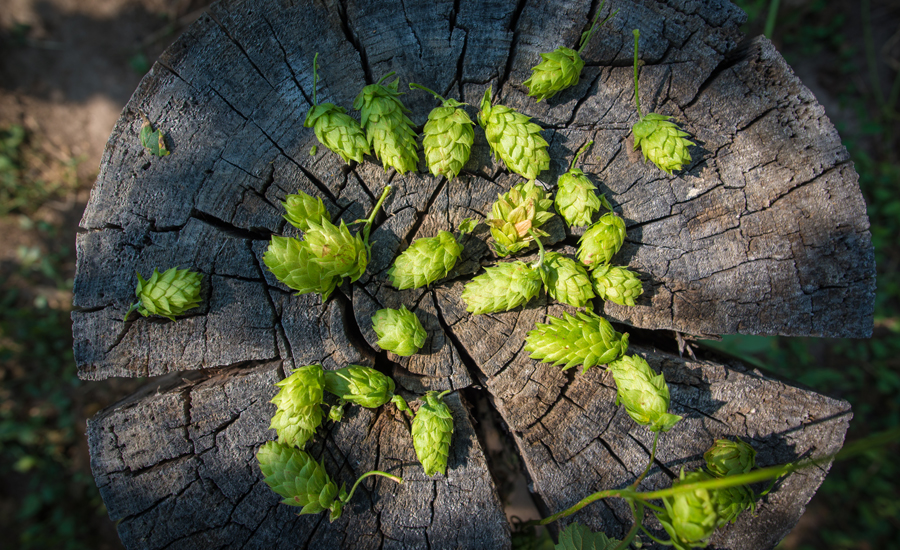
  1. Give the cone a light squeeze. If the cone stays compressed, it’s not ripe enough. When they feel light and dry—and spring back after a squeeze—they’re ready to be harvested.
  2. Pick a cone, roll it in your hands and smell it. If it has a pungent smell between cut grass and onion, it’s time to harvest.
  3. Roll the hop next to your ear. If it makes a cricket sound, this also means they’re ready to harvest. If the lupulin turns orange and smells rancid, you’ve overshot your window.
  4. The hop should be springy, dry and papery on the tips, and sticky to the touch.
  5. Look for lupulin, the visible, thick yellow substance on the outside of the cone.

Hop HarvestingHarvesting Your Hops

There are two methods for picking your hops: pick by hand (recommended for first-year harvests) or cut down the bine (recommended for all harvests after the first year).

If you cut the bine down, cut two to three feet above the ground to prevent injury to the root system and crown. For first year bines, try to pick the cones and not cut down the bine until it dies off. Vital nutrients will flow back to the root system for the winter months and ensure it survives. For following years, cut the bine down and be careful not to damage or dirty those precious lupulin glands. You should expect one to two pounds of dry hops per mature plant.

Be sure to wear durable, abrasive resistant clothing, gloves and goggles during harvest. Hops have hooked hairs that can cause cause skin rash and small cuts.

Now, invite some friends over to help you pick the hops while enjoying some homebrew!

How to Dry Hops at Home

You’ve picked your hops, but you’re still not done. After you pick hops, you have two options: throw them directly into a brew and make a wet-hopped beer or dry them to use later.

Fresh hops are about 80 percent water, so you’ll need to use more than you would with dry hops. In general, wet hops are used four to six times the dry hop rate. For example four to six ounces of wet hops would be the equivalent of one ounce of pelleted dry hops.

If you choose to dry your hops to use later, you can also more easily predict alpha acid contribution, as dried hops are about 10 percent water, the equivalent of commercial hops.

Important factors for drying hops: time, light, heat and moisture.

To prevent oxidation and isomerization, drying shouldn’t last more than three days and heating temperatures shouldn’t exceed 140°F (60°C). Drying your hops is going to drive off some wanted aromatics, but temperatures above the 140°F threshold will drive off many more complexities.

There are a few different methods used for drying hops. The key is to dry them quickly without heating them up too much. Cooler temperatures will take longer, but will produce better quality hops.

Hop Harvesting

Hop Drying Methods:

Food dehydrator: Using a food dehydrator is the easiest way to dry out your hops as it ensures air movement but does not get excessively hot.

Well-ventilated oven: You can use your oven to dry your hops by spreading them out on a pan. You will need to make sure that you get adequate air flow through the oven, watching closely by checking on them at least every 20 minutes. The temperature should never exceed 140°F (60°C).

Hop drying screen: If you have a small amount of hops to dry, the easiest way to do so is spread them out over a window screen or a house air filter. Place them in a warm, dry location. You can use landscape fabric over the top to keep them in the dark and occasionally fluff the hops so moist inner cones are brought to the outside of the pile. Leave them for a few days with a fan under or next to them to maintain air flow. You will also want to elevate the screen to improve air flow.

The hops need a moisture content of eight to 10 percent by weight to prevent molding. To see if they’re dry enough, try breaking the central stem of the cone, it should be brittle enough to snap in half. When dry, the yellow powdery lupulin should easily fall from the cone and the leaves should have a papery and springy texture. If your hops aren’t properly dried before storage, they could become moldy, wilted or rancid.

Hop HarvestingPackage Your Hops

You’ll probably want to save some hops for later brew days, so making sure they are preserved for maximum brewing potential is important. First, you want to weigh them out and separate them into one to two ounce bags so you will only have to defrost the amount you need when it’s time to brew again.

Once you’ve divided up your hops into plastic freezer bags, food saver bags, or air tight jars, push as much air out of the containers as possible. A vacuum seal is ideal for this process, but not necessary. You’ll flatten out and crush your pretty little hop cones, but it’s for their own good! You don’t want any oxygen contaminating and ruining all your hard work. Label them with the type of hop and toss them into the freezer for safe keeping.


John Moorhead is Director of the National Homebrew Competition and AHA Special Projects Coordinator.

The post How to Harvest, Prepare and Store Homegrown Hops appeared first on American Homebrewers Association.

Posted on

AHA Releases New Sizzlin Summer Styles

Need some stylin’ new threads to step up your summer style? Check out the new American Homebrewers Assocaition merch over on our store!

In addition to the new stuff, you’ll also find our perennially popular items, including AHA pins, wall tackers, posters, growlers, and more.

Visit the AHA Merch Store.

Beer Pocket Tee

Beer me that pocket tee! Shirts with contrasting pockets are so hot right now… and you’ll look so cool sporting this one. View in store

Beer Pocket Tee (unisex)

Be Hoppy Tee

No need to worry when you can be hoppy! Ladies in the place, this shirt is callin’ out to ya. View in store

Be Hoppy Tee (women’s)

Brew Guru Hat

Keep your dome cool and look cool while sporting the snap-back Brew Guru hat. View in store

Brew Guru Hat (one-size fits all)

SRM Tee

Demonstrate your beery knowledge is on the next level. This tee is a great conversation starter: “Do you even SRM, bro?” View in store

SRM Tee (unisex)


The post AHA Releases New Sizzlin Summer Styles appeared first on American Homebrewers Association.

Posted on

Meeting Topic: New Hop Varieties

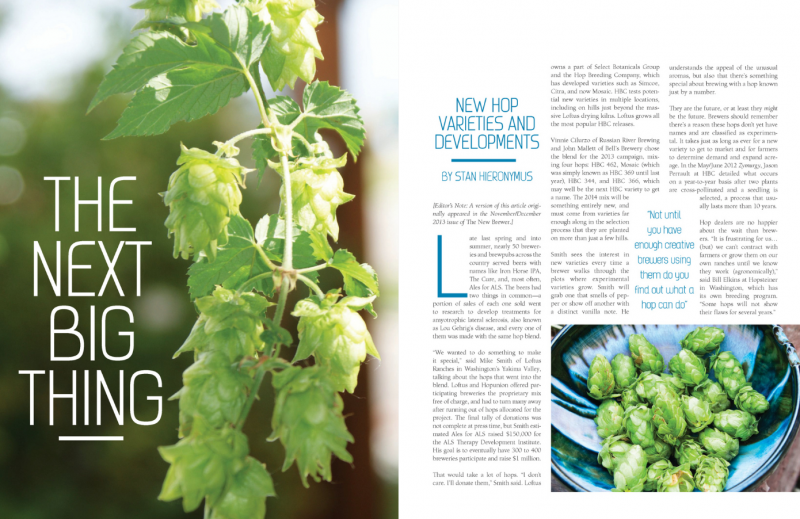
Developing a commercial hop variety takes at least 11 years. Each year, hop farmers plant about 40,000 new seedlings for trials. Of those 40,000 seedlings, only about 20 of them will eventually make it to commercial release (0.0005%). New hop varieties will be selected based on quality brewing attributes. These include characteristics like high alpha acid content and unique aroma and flavor profiles.

For your July 2017 club meeting, educate your club members on new hop varieties using the resources below.


Zymurgy Volume 37 No. 1 – January/February 2014

The Next Big Thing – p. 54


National Homebrewers Conference 2015

Brewing With Experimental Hops: A New Hop Variety Just For Homebrewers | Slides (PDF) | Audio


HomebrewersAssociation.org

10 Facts From YCH Hops’ Hop & Brew School


Tuesday Beer Trivia

The Evolution of Hops

beer trivia

The post Meeting Topic: New Hop Varieties appeared first on American Homebrewers Association.

Posted on

How to Add Homebrew Club Affiliation to Your AHA Member Profile

With the rollout of the new club insurance premium reimbursement plan, it is important that all AHA members who are in good financial standing with their local homebrew clubs update their account on HomebrewersAssociation.org. This will allow us to accurately track the number of members in your club and your club’s eligibility to have the AHA pay for your liquor liability insurance.

Updating your club affiliation is easy. Just follow these simple steps:

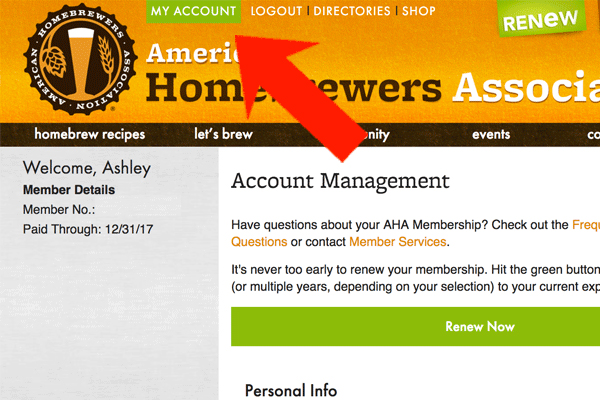
  1. Click “MY ACCOUNT” on the AHA homepage. Note: If you are not already signed in, you will need to click “Member Login” and enter your credentials.update club affiliation
  2. Click “Yes” when asked if you belong to a homebrew club.update club affiliation
  3. Type the name of your club in the search box. Clubs registered with the AHA will populate in a drop-down box based on your search terms. Be sure to choose the correct club. You can select up to five (5) different clubs if you are a dues-paying member in all five. update club affiliation
  4. Click “Save.”
    update club affiliation

That’s it! If you have any questions about updating your profile, or if you need to have your username and/or password reset, please contact us at [email protected] or call us at 303-447-0816 ext. 0.

The post How to Add Homebrew Club Affiliation to Your AHA Member Profile appeared first on American Homebrewers Association.

Posted on

Heart of the Valley Homebrewers Named 2017 Radegast Club of the Year

This article was written by Heart of the Valley (HOTV) homebrew club member Barry Cooper as part of the 2017 Radegast Club of the Year Award application. HOTV was awarded the 2017 Radegast Club of the Year Award.

Find out how your homebrew club can be the next Radegast Club of the Year.

* * *

Heart of the Valley Homebrewers (HOTV) serves homebrewers from Oregon’s central Willamette Valley, drawing its members from Corvallis, nearby Albany, and the surrounding areas. The club’s main focuses are on beer and brewing education; hosting one of Oregon’s oldest homebrew competitions; providing community service; and charitable giving. The last of these is driven by the club’s fall beer festival, Septembeerfest.

Our membership varies because we are based in a college town, but HOTV has about 30 to 35 active members at any one time. While there is little ethnic diversity in the Willamette Valley of Oregon, the club strives for inclusivity through gender diversity and occupational diversity—all interested members of our community are welcome to join the club.

Women take an active part in running the club, and in recent years, women have served as president, competition chair, and secretary. Corvallis, which is home to Oregon State University (OSU) and its strong Fermentation Sciences program, contributes members, resources, and inspiration to the club. Our membership reflects the community: students (including some studying fermentation sciences), staff and faculty; homebrew storeowners; commercial brewers; professional workers and tradesmen; all contribute ideas and to the club’s success.

HOTV has a long and glorious history. It was founded as Corvallis Homebrewers in 1982, with the inaugural meeting held on June 6 of that year. As homebrewers from surrounding communities became interested in participating, the name was later changed to the more inclusive Heart of the Valley Homebrewers. The club has a history of recruiting members for the AHA. For example, one of our members, (the late Lee Smith) was profiled in Zymurgy (March/April 1999), where he was recognized as the AHA Recruiter of the Year.

HOTV meets monthly, usually at the home of a member, where members sample one another’s beers, as well as those of local brewpubs and unusual commercial brews. We occasionally arrange comparative tastings of commercial examples of different beer styles, with members voting according to their preferences. This is a great way to experience brews that one hasn’t tried before and to find new favorites and new brewing challenges. Occasionally, meetings are held at our local brewing supply shop, Corvallis Brewing Supply, or at local craft breweries.

“Women take an active part in running the club, and in recent years, women have served as president, competition chair, and secretary.”

HOTV is formally organized and governed by its bylaws. A board of directors meets regularly to discuss club business, and we publish minutes of both club meetings and board meetings.

The club produces a newsletter that is distributed to members electronically. We also maintain a website at hotv.org. The club is also on Facebook, which has become one of our primary means of communication. We maintain a special page for our Septembeerfest event. The newsletter keeps members informed of club educational matters, club activities, deliberations, and decisions of the board of directors.

HOTV is strongly committed to the education of our members and to the general public in the art of brewing in general and homebrewing in particular. To that end, we promote the following activities.

Brewery Education Tour

This is a day tour of Oregon breweries and brewpubs held in the spring and the fall. In the spirit of responsible drinking, the club hires a bus and driver to avoid the temptation to drink and drive. The educational purpose of the event is to provide insight into how breweries, especially small breweries, operate and to give members behind-the-scenes access not usually available to the public.

For example, in November 2015, the club’s Fall Brewery Educational tour traveled east to Bend, home to more than 30 breweries. The highlight of the trip was visiting a small brewery, the Ale Apothecary, which focuses on barrel-aged sour beers; this brewery is known for lautering out of a tree trunk, over a bed of pine brush. This incredibly rewarding brewery visit really expanded members’ views of what is possible with brewing. In late October 2016, we visited Hood River, Oregon, and enjoyed a personalized tour of Logsdon Farmhouse Ales.

Brew Judge Certification Program (BJCP)

HOTV

The club provides beer judge training, with the aim of taking judging exams. These activities are held according to need, whenever there are sufficient numbers of prospective participants. They are important in exposing prospective judges to many different beer styles, with an appreciation of their desired characteristics. HOTV currently has 16 members who are BJCP certified. That amounts to almost 50 percent of our membership. This year, we are proud to say that two more of our members passed both the online and tasting exams.

Cooperative Brewing with the Oregon State University Fermentation Science

Program: These are highly educational sessions in which members participate in brewing on the equipment and facilities at OSU. The purpose of this event is to teach members the fundamental biochemical and biological principles underlying mashing, fermentation, and other aspects of brewing. We learn a lot and have a heck of a fun time doing it!

Sensory Training: As part of our educational mission, the club periodically organizes sensory tastings to help participants recognize off flavors. These sessions, open to the public, are also held at OSU and are taught by faculty members in the Fermentation Sciences program.

Public Outreach Club Brew Days

These events are held periodically in the “brewhouses” of club members or, occasionally, at microbreweries. Their purpose is help homebrewers learn from one another and to educate members and newcomers about different brewing techniques, different equipment setups, etc. Attendees are encouraged to bring friends who are interested in becoming brewers.

Members of the club participate in other educational events such as the AHA Big Brew day. These events are held in locations where members of the public are likely to stop by, ask questions, and, hopefully, join the hobby. We take any opportunity that we can to educate the public. In 2015, out of the many brew clubs in Oregon, HOTV was asked to put on a demonstration of homebrewing at the Oregon State Fair. This year we plan to hold a Big Brew day in downtown Corvallis, in a parking lot next door to our local homebrew store (LHBS), Corvallis Brewing Supply. This should attract a lot of attention.

HOTV Homebrewers

Homebrew Competitions

Competitions add variety for club members and allow the club to give back to the homebrewing community. One of the longest continuously running homebrew competitions in the nation, HOTV is hosting its 35th annual Oregon Homebrew Festival. This competition is held in Corvallis or Albany on the third weekend in May each year. It is an AHA and MCAB (http://mcabchampionship.com) recognized event.

“One of the longest continuously running homebrew competitions in the nation, HOTV is hosting its 35th Oregon Homebrew Festival.”

Homebrewers from all over the country enter the competition, from our own members to the public. BJCP judges from the club and surrounding area evaluate the entries, and we involve both novice judges and newcomers. The Friday before the event, we hold new judge training for all new judges wishing to participate, which is designed to promote beer literacy and education. Prizes and ribbons are awarded to the winners.

This event serves two major educational purposes. First, it allows judges to develop their tasting and evaluation skills, often leading to their participation in the BJCP. The second purpose of the event is to provide brewers with critical evaluations of their beers. Entrants are provided with a written evaluation of their entries using standard BJCP forms, helping to educate them as to ways they can improve their brews.

Other Educational Activities

We support brewing education in additional ways. We regularly donate to the Glen Hay Falconer Foundation, an organization dedicated to brewing education. Although its focus tends to be on education of brewing professionals, we feel that it helps with the well-established tradition of experienced homebrewers becoming professionals.

This year HOTV began a new program of financial support for members to attend the Pacific Northwest Homebrew Conference, an educational program that includes a series of lectures by experts, as well as tastings of commercial beer and homebrew.

One of our members owns Corvallis Brewing Supply, our LHBS. He holds regular classes introducing people to homebrewing, which benefits both his business and the hobby at large.

Finally, as pointed out elsewhere, we provide a booth at Septembeerfest at which we serve beers brewed by our members. Our goal is to convince members of the public attending the festival that homebrewers can make beers rivalling the best commercial brews.

Charitable Giving

HOTV

Charitable giving is a significant aspect of the club’s activities. Despite HOTV’s relatively small club size, it makes a huge impact benefiting local community charities. Because all of our profits are donated to charitable causes, the IRS has granted HOTV tax-exempt status under Section 501(c)(4). Members participate in several activities to educate homebrewers and benefit the local community.

Last year marked a fantastic Septembeerfest with more than 3,200 participants attending. We boasted an awesome beer, cider, and mead selection (72 varieties on more than 50 taps), great music, and food. This is the club’s annual signature event, and in recent years, we have raised $25–30,000 in annual donations for charities that include the Linn-Benton Food Share, the Heart of the Valley Homebrewers’ Endowment at Oregon State University supporting scholarships in Fermentation Science, the Glen Hay Falconer Foundation, and other local charities.

“Since 2006, HOTV has donated more than $140,000 to local charities.”

Held annually, the Heart of Valley Homebrewers’ Septembeerfest will mark its 10th anniversary in September 2017. This fall festival has grown steadily since its inception and become an expected tradition of the Corvallis beer scene as we endeavor to highlight the best and most interesting beers, ciders, and meads produced. This year, we expect even greater attendance, and it serves as the showcase event and kickoff of Corvallis Beer Week.

Septembeerfest is not just about serving commercially produced beverages. True to our educational mission, HOTV hosts a popular tent in which we serve free tastings of members’ brews in order to educate attendees about our passion, to show that homebrewers can produce excellent beer, and to try to get them involved in the hobby.

With the success of Septembeerfest and the Oregon Homebrew Festival, HOTV is able to support a number of worthy local charities and organizations including Linn Benton Food Share, Heart of the Valley Homebrewers Endowment at Oregon State University supporting scholarships in Fermentation Science, and the Glen Hay Falconer Foundation. Since 2006, more than $140,000 has been donated to local charities, the equivalent of almost $1,000 per member in recent years.

Donations to these groups have been as follows:

Linn-Benton Food Share

  • Total donated since 2006: $94,825
  • For more than 30 years, Linn-Benton Food Share has been feeding Linn and Benton counties, because they are committed to the idea that no one goes hungry in the two county area they serve.

Heart of the Valley Homebrewers Endowment at Oregon State University

  • Total donated since 2006: $34,250
  • The Lee Smith Scholarship has been established to honor the late Lee Smith, a past club treasurer and an activist for the homebrewing hobby. As mentioned previously, Lee was recognized for his efforts in Zymurgy in 1999.

Glen Hay Falconer Foundation (http://www.glenfalconerfoundation.org)

  • Total donated since 2006: $7,250
  • The Glen Hay Falconer Foundation is a nonprofit organization created to commemorate and celebrate the life, interests, and good works of a well-loved and leading Northwest brewer. The mission of the Foundation is to contribute to the Northwest craft brewing community by providing opportunities for professional and aspiring brewers to further their knowledge and expertise.

Other donations:

  • We have contributed $3,750 to Kiwanis & $675 to other smaller charities.

Distribution of donations graph:

heart-of-the-valley

Adopt-A-Highway program

Not all volunteer activities of HOTV are geared towards monetary donations. The club also donates its time to keeping the area’s highways litter-free. The club has adopted a two-mile section of Oregon Highway 20 between Corvallis and Albany, the two communities from which most of our members come. Club members organize and perform litter pickups four times a year on this section of road. Although not strictly speaking a charitable activity, this is a significant public service aimed at helping to keep this beautiful part of the country—well—beautiful. At last count over 2,370 bags of trash have been picked up since 1995.

HOTV is a brewclub that celebrates the wonder of beer and the challenge of making the best beer possible. More than that, we are involved in numerous activities designed to attract people to the hobby and we are committed to being good neighbors, supporting our community, our local brewers and, especially, our local educational programs. We believe that this club is more than a brew club; despite its small size, how awesome is it that it can accomplish so much and donate so much to local charities and the local community?

“We believe that this club is more than a brew club; despite its small size, how awesome is it that it can accomplish so much?”

The post Heart of the Valley Homebrewers Named 2017 Radegast Club of the Year appeared first on American Homebrewers Association.

Posted on

Wet Hopped Beer: Showcasing Fresh Hops

Fresh is best, they say, and beer is no exception. Fresh ingredients are important for flavor and quality, and hops are among the most celebrated. The hop harvest is like Christmas for brewers, though the harvest happens a bit earlier, sometime in late summer to early fall. But that doesn’t stop hop growers and hop heads from celebrating.

I certainly wasn’t the first person to add freshly picked hops to a batch of homebrew—I must concede that title to those who preceded me hundreds of years ago. However, countless beers across the United States owe their existence to the addition of fresh hops, also called wet hops.

The two terms aren’t necessarily mutually exclusive. While brewers and beer drinkers tend to mean the same thing when they interchange them, fresh hops can mean hops used right out of the oast house, while wet hops are never dried (well, duh). The difference between the two matters just as much in the kettle as it does when you drink the beer. For this article, we’ll be focusing on wet hops.

Vinnie Cilurzo at Russian River Brewing described the difference in For the Love of Hops by Stan Hieronymus: “They both do a great job, but you get more fresh aromas and flavors when the product is wet, and it takes more, as you have to compensate for the water that is still in the hops… I find more melon and grassy notes in wet hops, grassy almost like a Sauvignon Blanc.”

The late Michael Jackson described one of the most influential commercial wet-hopped beers in the United States circa 1996, Sierra Nevada’s Northern Hemisphere Harvest Ale, as having “the lightest touch of malty sweetness to start; then a surge of cleansing, refreshing, resiny, almost orange-zest flavors; and finally, an astonishingly late, long finish of fresh, appetite-arousing bitterness.”

Not only do wet hops impart different flavors and aromas, but they are delicious when used correctly. There are a few keys to brewing great wet-hopped beers and a few more things you should understand about hops to keep that wet-hopped goodness in your homebrew.

Wet Hops Are Wet

Wet hops contain about 80 percent water, so you’ll need to use more than you would when using dry hops. In general, four to six times as many wet hops are needed by weight as dry hops. For example, one ounce of pelleted dry hops would be the equivalent of four to six ounces of wet hops. You get the idea.

Wet hops take up more room in the kettle, enough to consider reducing batch size depending on the overall hop amount and the size of your system. They’ll also add water that needs to be considered when calculating original and final gravities.

Freshness Is Everything

When Ken Grossman, Founder and CEO of Sierra Nevada Brewing, first started homebrewing, he had difficulty finding quality hops because “the homebrew trade consumed an insignificant amount of hops and, apparently, in the eyes of hop growers and merchants, wasn’t worth pursuing.” Oh, how times have changed.

There’s been a resurgence in hop growing since the 2008 “hop crisis,” making it easier for commercial brewers and homebrewers to source locally grown hops or simply supply their own.

Once harvested, wet hops literally begin to rot because the cones contain a high percentage of water, which is why farmers transport them directly from the field to breweries—or in your case from your backyard to your brew setup. It’s important to use wet hops within a matter of days of picking, preferably within one day, lest you risk spoiling and ruining your hops.

wet_hopping_internal

Hops in Moderation

Like all enjoyable things, wet hops should be used in moderation. You can quickly reach a breaking point at which desirable “grassy” aromas and flavors remind you of chewing on a salad. Other undesirables include notes of tobacco and chlorophyll to name a few.

Remember: you’re adding a huge amount of green matter to your homebrew, the result of which can be green flavors. These are acceptable in wet-hopped beers to an extent. Brewing requires balance and an awareness of the style. It’s a good reason to use dried hops for the bittering portion of your boil and wet hops for the aroma and flavor. If you try to drive up bitterness with wet hops, you risk losing their nuances.

Using dry hops for bitterness also reduces hop matter in the kettle and lets you work with hops of known alpha acids. You don’t really know how much bitterness the hops from your backyard may hold, and using them near the beginning of the boil can yield unpredictable IBUs and an even more unpredictable beer.

Life Cycle of Hops

Hops Before the Kettle

Hops’ desirability lies in the essential oils they produce, which constitute up to 4 percent of the hop cone. These oils increase during the weeks before harvest and continue to change after the hops are dried and stored.

In Stan Hieronymus’s book For the Love of Hops, he points to recent research that tracks how dramatically essential oils change in the days before hops are picked, and he implies that wet hops may produce different odor compounds than do dried hops. However, there haven’t been any similar studies about wet hops. “This is not a scientific exploration of brewing,” said Ninkasi Brewing co-found Jamie Floyd. “Were’s the economic benefit of analyzing a beer made once a year?”

Hops in the Boil

Hops are used during the boil because the high temperatures activate many components, but a side effect is that the same phenomenon removes some of those essential oils we crave. Thus, brewers wanting to know how much bitterness they’re adding may choose to use dried hops with known, measured alpha acids. Those concerned with preserving oils, such as linalool and gernaniol, should add wet hops towards the end of boil, at flameout, or during the whirlpool.

Hops in the Fermenter

The effect of adding hops during fermentation is somewhat inconclusive. However, we know something happens because we’ve tasted the differences before, the results of bio-transformations of hop compounds that occurs in the presence of yeast. There’s another reason to believe wet-hopped beers will taste different. All you need to do is taste it over time. When I taste beer about 24 hours into fermentation, I get a very green taste. Over time, the beer starts to open up, and the oils come through in the aroma and flavor. Again, in the words of Jamie Flyod, “this is not a scientific exploration of brewing.” Right on, Jamie.

Hops in the Bottle

Most of my homebrewed beer contains residual bits of hops because I cannot—and never will be able to—afford a centrifuge, which is why the taste changes over time after packaging. Another source of diminishing quality can be poor oxygen control in the bottling process that will hurt any hoppy beer. However, I’ve made wet-hopped beers before, and they’ve held up well when kegged or bottled. But that might just because they tasted so fresh that I drank them quickly.


Sources:

  • For The Love of Hops by Stan Hieronymus
  • Oxford Companion to Beer by Garrett Oliver
  • Beyond the Pale by Ken Grossman
  • “Getting the Most From Your Hops” by Stan Hieronymus

The post Wet Hopped Beer: Showcasing Fresh Hops appeared first on American Homebrewers Association.

Posted on

2017 Best Beers in America Results

Each year we ask Zymurgy magazine readers to share a list of their 20 favorite beers that are commercially available in the United States.

We’ve tallied the votes, and here are the results for the 2017 Best Beers in America survey including Top Ranked Beers, Top Breweries, Best Porfolio and Top Imports. You can also check out the Best Beers in America results broken down by individual state.

Note: ‘T’ indicates a tie, and hyperlinked beers include a clone homebrew recipe.

Top-Ranked Beers

  • 1. Bell’s Two Hearted Ale
  • 2. Russian River Pliny the Elder
  • 3. Founders Breakfast Stout
  • 4. Three Floyds Zombie Dust
  • 5. Bell’s Hopslam
  • T6. Founders KBS (Kentucky Breakfast Stout)
  • T6. The Alchemist Heady Topper
  • T8. Deschutes Fresh Squeezed IPA
  • T8. Sierra Nevada Celebration
  • 10. Ballast Point Sculpin IPA
  • T11. Boulevard Tank 7 Farmhouse Ale
  • T11. Sierra Nevada Pale Ale
  • T13. Founders All Day IPA
  • T13. Lawson’s Finest Liquids Sip of Sunshine
  • 15. Cigar City Jai Alai IPA
  • 16. Deschutes Black Butte Porter
  • 17. Goose Island Bourbon County Brand Stout
  • 18. Left Hand Milk Stout Nitro
  • T19. Lagunitas IPA
  • T19. Dogfish Head 90 Minute IPA
  • T19. Stone IPA
  • T22. Tree House Julius
  • T22. Odell IPA
  • T22. Russian River Blind Pig IPA
  • T22. Toppling Goliath pseudoSue
  • 26. Fat Head’s Hop Juju
  • T27. Fat Head’s Head Hunter IPA
  • T27. Firestone Walker Double Jack
  • T27. Melvin 2×4 DIPA
  • T27. New Belgium La Folie
  • T27. Odell 90 Shilling
  • T27. Russian River Pliny the Younger
  • T27. Sierra Nevada Torpedo Extra IPA
  • T27. The Alchemist Focal Banger
  • T27. Tröegs Nugget Nectar
  • T27. Founders Backwoods Bastard
  • T27. Oskar Blues Ten FIDY
  • T38. Great Lakes Edmund Fitzgerald Porter
  • T38. Deschutes The Abyss
  • T38. North Coast Old Rasputin
  • T38. Arrogant Bastard Ale
  • T38. Stone Enjoy By IPA
  • T43. Dogfish Head 120 Minute IPA
  • T43. New Glarus Wisconsin Belgian Red
  • T43. Oskar Blues Dale’s Pale Ale
  • T43. Russian River Consecration
  • T47. Wicked Weed Pernicious
  • T47. Firestone Walker Union Jack
  • T47. New Holland Dragon’s Milk
  • T47. Oskar Blues Old Chub
  • T47. Three Floyds Alpha King

Top Breweries

  • 1. Bell’s Brewery, Inc., Comstock, Mich.
  • 2. Founders Brewing Co., Grand Rapids, Mich.
  • 3. Russian River Brewing Co., Santa Rosa, Calif.
  • 4. Sierra Nevada Brewing Co., Chico, Calif. and Mills River, N.C.
  • 5. Stone Brewing, Escondido, Calif., Richmond, Va., and Berlin, Germany
  • 6. Firestone Walker Brewing Company, Paso Robles, Calif.
  • 7. Deschutes Brewery, Bend, Ore.
  • 8. Dogfish Head Craft Brewery, Milton, Del.
  • 9. Lagunitas Brewing Company, Petaluma, Calif. and Chicago, Ill.
  • 10. Ballast Point Brewing, San Diego, Calif.
  • 11. Odell Brewing Co., Fort Collins, Colo.
  • 12. Three Floyds Brewing Co., Munster, Ind.
  • 13. Boulevard Brewing Co., Kansas City, Mo.
  • 14. Oskar Blues Brewery, Longmont, Colo., Brevard, N.C., and Austin, Texas
  • 15. New Glarus Brewing Co., New Glarus, Wis.
  • T16. New Belgium Brewing, Fort Collins, Colo. and Asheville, N.C.
  • T16. The Alchemist, Waterbury and Stowe, Vt.
  • 18. Avery Brewing Co., Boulder, Colo.
  • 19. Great Lakes Brewing Company, Cleveland, Ohio
  • T20. Cigar City Brewing, Tampa, Fla.
  • T20. Great Divide Brewing Co., Denver, Colo.
  • T20. Left Hand Brewing Co., Longmont, Colo.
  • 23. Victory Brewing Co., Downingtown, Pa.
  • 24. Surly Brewing Co., Minneapolis, Minn.
  • T25. Fat Head’s Brewery, Cleveland, Ohio, and Portland, Ore.
  • T25. Goose Island Beer Co., Chicago, Ill.

Top Imports

  • 1. Unibroue La Fin Du Monde (Canada)
  • 2. Duvel (Belgium)
  • T3. Orval (Belgium)
  • T3. Saison Dupont (Belgium)
  • T3. Rodenbach Grand Cru (Belgium)
  • T3. St. Bernardus Abt 12 (Belgium)
  • T7. Chimay Cinq Cents (White) (Belgium)
  • T7. Duchesse De Bourgogne (Belgium)
  • T7. Westvleteren 12 (Belgium)
  • T7. Paulaner Oktoberfest (Germany)
  • T7. Schneider Aventinus (Germany)
  • T7. Mikkeller Beer Geek Breakfast (Denmark)
  • T7. Epic Hop Zombie (New Zealand)

Best Portfolio

  • 1. Stone Brewing (31 beers)
  • 2. Bell’s Brewery, Inc. (27 beers)
  • 3. Firestone Walker Brewing Co. (25 beers)
  • 4. Sierra Nevada Brewing Co. (24 beers)
  • T5. Dogfish Head Craft Brewery (22 beers)
  • T5. Lagunitas Brewing Company (22 beers)
  • T7. Boulevard Brewing Co. (21 beers)
  • T7. Founders Brewing Co. (21 beers)
  • 9. Avery Brewing Co. (19 beers)
  • T10. New Glarus Brewing Co. (18 beers)
  • T10. Odell Brewing Co. (18 beers)

Share your favorite commercial beers in the comments below!

The post 2017 Best Beers in America Results appeared first on American Homebrewers Association.

Posted on

Building a Mash Tun has Never Been So Easy

Unless you’re using the brew in a bag technique, a mash tun is an essential piece of equipment when advancing to all-grain brewing. Mash tuns come in all shapes, sizes and materials, and the ideal vessel for you will depend on your current procedures and future goals as a homebrewer. Mash tuns can be purchased from a homebrew shop, or easily made at home with limited skill and tools.

In this tutorial, we’ll cover how to build a mash tun for batch sparge brewing (~5 gallon batches), an approachable means of all-grain brewing. For additional instructions, follow along with AHA Director Gary Glass in part three of the Introduction to All-Grain Video Series, as he walks viewers through the steps to building this mash tun.

How it Works

Simply put, a mash tun is a vessel for conducting the mashing process, while allowing for easy lautering—the process of removing the liquid wort from grain solids.

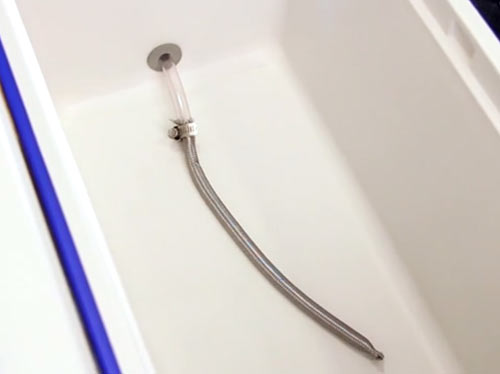
This specific build uses a stainless steel supply line as the filter to allow the liquid to move to the boil kettle, while leaving the grains and as much sediment as possible behind in the mash tun. The supply line is prepared so that there is basically a cylindrical screen of stainless steel that is fine enough to prevent most solids from being transferred, without too much worry of clogging.

Materials

  • Build a Mash Tun48 quart picnic cooler
  • Rubber mini-keg bung
  • (2) 1/4″ hose clamps
  • 1/2″ hose clamp
  • 3/8″ inline nylon valve
  • 7/16″ vinyl tubing*
  • 16″ stainless steel supply line**
  • Food-grade sealer

*Enough length to reach your boil kettle.

**Shorter or longer lengths should work fine.

Tools

  • Scissors, to cut tubing
  • Screw driver, for tightening hose clamps
  • Needle-nosed pliers, for preparing the stainless steel braid
  • Paper towel or rag, to clean up sealer
  • Saw, or other means of cutting through stainless steel supply line

Construction

Putting together a mash tun out of a rectangular picnic cooler is actually quite easy. Review the following steps, gather the materials and tools, and you’ll have yourself a homemade mash tun in no time.

  1. Remove the spigot from the picnic cooler. Typically it can be unscrewed by hand, but you may need to use pliers or some other tool if it is screwed on tight.
  2. Remove the plastic plug from the rubber mini-keg bung. You will not need this.
  3. From the inside of the cooler, place the rubber mini-keg bung in the whole where the spigot was.
  4. Optional: If the mini-keg bung is not fitting snug, food-grade sealer can be used to create a water-tight seal.
  5. Run 6″ of the vinyl tubing through the mini-keg bung so that there are a few inches hanging out of each side of the cooler.
  6. Prepare the stainless steel braid:
    1. Cut off both ends of the stainless steel supply line with snips or a saw.
    2. Remove the plastic tubing from the inside of the stainless steel braid.
    3. Using needle-nosed pliers, clamp one end of the supply line shut.
  7. Attach the prepared stainless steel braid to the end of vinyl tubing on the inside of the cooler using the 1/2″ hose clamp.
  8. Attach the nylon valve to the end of the tubing on the outside of the cooler using a 1/4″ hose clamp.
  9. On the other end of the nylon valve, attach a piece of tubing long enough to reach your boil kettle (typically ~2-4 feet) using a 1/4″ hose clamp.

[vimeo 63918361 w=500 h=281]

Additional All-Grain Resources

We offer all the resources you need to become an accomplished all-grain brewer!

Other resources:

The post Building a Mash Tun has Never Been So Easy appeared first on American Homebrewers Association.

Posted on

A Big Year for Big Brew: After 20 Years, More Beer than Ever

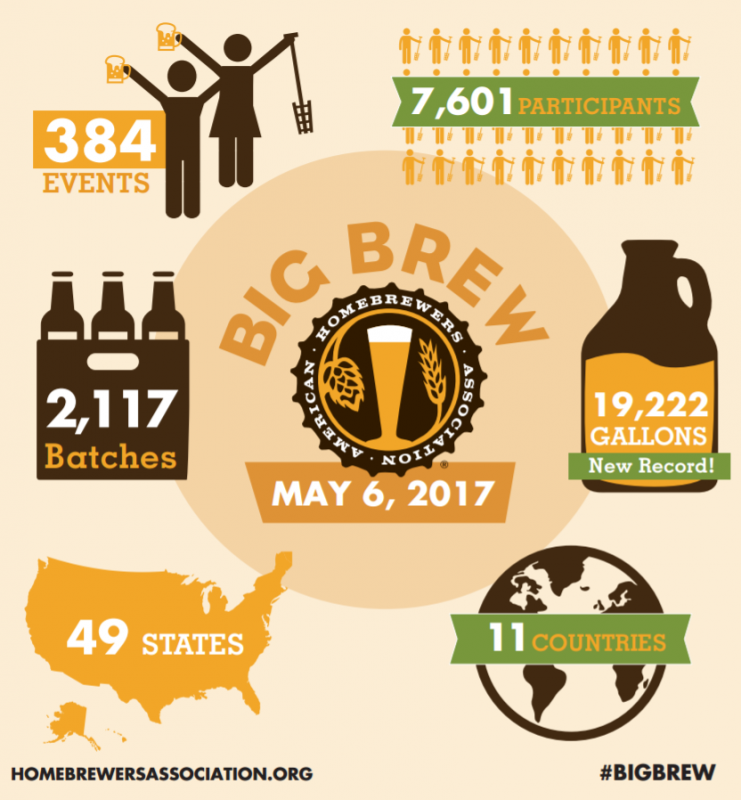
May 6, 2017 marked the 20th annual celebration of Big Brew for National Homebrew Day. Homebrewers from 11 different countries and territories and 49 states fired up their brew kettles and brewed more than 2,000 batches of beer at 384 Big Brew events around the globe. The American Homebrewers Association (AHA) estimates that over 7,500 people participated in this year’s celebration, brewing a record 19,222 gallons (72,763 liters) of beer.

Craft breweries, homebrew shops and clubs, and a number of individuals hosted Big Brew events in their own backyards. Of the 384 Big Brew sites,

  • 134 were hosted by a homebrew retail business,
  • 85 were hosted by breweries,
  • 81 were hosted by individual homebrewers,
  • 52 were hosted by homebrew clubs, and
  • 32 were hosted by other businesses.

Those other businesses included craft beer–centric restaurants and hop farms, and one Big Brew event even mashed in at John Smith’s Bay Beach in Smith’s Parish, Bermuda!

2017-Infographic big brew

The Glass City Mashers in Toledo, Ohio claimed 46 batches, the most brewed for Big Brew 2017, and Great South Bay Brewery in Bay Shore, N.Y. reported the largest volume of beer, a whopping 1,310 gallons (4,959 liters) of homebrew.

The states reporting the highest totals were New York (1,980 gallons/7,495 liters), Michigan (1,242 gallons/4,701 liters), and Ohio (1,049 gallons/3,971 liters).

For the first time in 20 years of celebrating Big Brew, the AHA is excited to announce that the largest reported attendance for a single site was not from a Big Brew event in the United States. With 200 reported attendees, the Hovevey Zion Homebrew Club’s 8th Brew Party in Tel Aviv, Israel is the first international Big Brew site to host more homebrewers than any other event in the US!

Other countries and territories that celebrated Big Brew in 2017 included Argentina, Australia, Canada, Chile, Germany, New Zealand, Russia, and Singapore. Of the 19,222 estimated gallons brewed for Big Brew this year, 3,467 gallons (13,124 liters)—18 percent of the total—was reported by international Big Brew sites.

Big Brew 2017 attendees were encouraged to brew one of three recipes: Rushmore American IPA, Battre L’oie Saison, and Klang Fredenfest Oktoberfest Lager. All recipes were taken from the newly released version fourth edition of How to Brew by John Palmer, a book that has taught thousands of homebrewers to craft their own beer since it was first published in 1999.

Big Brew for National Homebrew Day finally turns 21 next year on May 5, 2018.

The post A Big Year for Big Brew: After 20 Years, More Beer than Ever appeared first on American Homebrewers Association.

Posted on

Club Connection: Your Homebrew Club’s Home Base

In November 2016, the American Homebrewers Association (AHA) relaunched the formerly discontinued clubs newsletter. To complement the newsletter, the AHA is proud to announce a new section of the website called Club Connection.

Club Connection offers valuable resources to your homebrew club and its members. We regularly add articles focused on managing a homebrew club, suggest resources and topics for your next club meeting, and deliver news from homebrew clubs around the country who bring the collaborative spirit of homebrewing into their local communities.

Club Connection also features the AHA’s homebrew club database and resources for your organization. The homebrew club insurance program, revenue-generating web banners for your club’s website, the Radegast Club of the Year homepage, and the media contact list request form are just a few of the resources you’ll find at the new site.

Everything you need to start, grow, maintain, and promote a homebrew club can be found in the Club Connection archives. We encourage you to ensure that your club’s contact information is up to date with the AHA. The AHA will automatically announce new content through our newsletter to the email address linked to your club’s record, but we encourage any of your interested club members to sign up for the Club Connection newsletter so that they, too, can benefit from these resources.

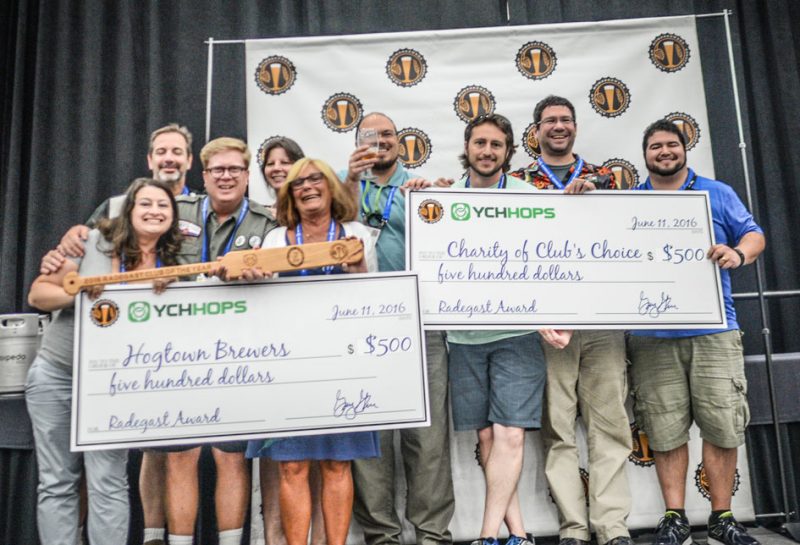
radegast club of the year award

2016 Radegast Club of the Year Award recipients, the Hogtown Brewers, at the 2016 National Homebrewers Conference Grand Banquet.

The post Club Connection: Your Homebrew Club’s Home Base appeared first on American Homebrewers Association.