Posted on

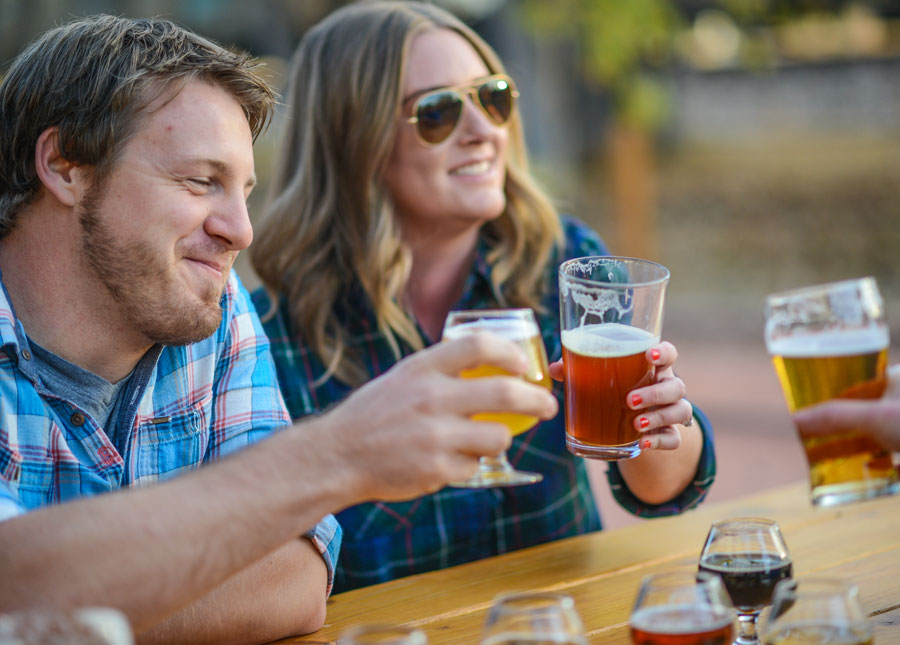
Yes, beer can be part of your healthy diet!

[Editor’s note: The information presented in this article should be used at the reader’s own discretion. Consult with a doctor when evaluating and changing your diet.]

As a certified personal trainer, one of my goals is to help clients, friends, and family achieve healthy and happy lives without depriving themselves of the pleasures of living. The topic of alcohol often comes up at work because I am an admirer of craft and good beer, which has led me to research the benefits and implications of beer in our bodies.

Alcohol has been a controversial topic in the fitness and health industry. Beer has been attacked by some of my colleagues in this area due to the effects of alcohol on the body and the amount of carbohydrates and calories present in it. What many may not know is that beer can be the healthiest option when it is compared with traditional non-alcoholic beverages present in the American diet, if you are over 21 years old of course.

According to Prof. Arne Astrup and his colleagues on “Moderate consumption as part of a healthy lifestyle,” a cold one can be an excellent source of nutrients for our bodies when consumed in moderation: 20 grams of alcohol for men and 10 grams for women is the maximum amount that people should consume daily. When it is translated to beer consumption, that’s about two 250 mL (8 oz.) glasses of 4% ABV beer for men and one 250 mL glass for women (Astrup et al., 2016). One reason for this difference between women and men is due to the enzyme alcohol dehydrogenase. Young male adults (<50 years old) have more of this enzyme, which helps detoxify and metabolize alcohol, than young female adults (Seitz et al., 1993).

Beer is an ancient beverage made of natural ingredients such as barley, hops, yeast, and water. These ingredients infuse our beloved gold liquid with vitamin B complex, folate, silicon, polyphenols, and other vitamins and minerals important to our health. In a study published in the 2007 American Journal of Clinical Nutrition, vitamin B complex deficiency was found to be associated with anemia and cognitive impairment in older adults (Morris et al., 2007). Folate is associated with prevention of cardiovascular and Alzheimer’s diseases, and silicon is important for bone formation and connective tissue health. Long-term consumption of polyphenols can help prevent cardiovascular diseases, diabetes, osteoporosis, and neurodegenerative diseases. Beer also has a healthy ratio of potassium to sodium, which helps keep blood pressure in a normal range. Lastly, beer is typically made of 92% water (Astrup et al., 2016).  

Furthermore, the number of calories in a beer depends on its alcohol and carbohydrate content. Two-thirds of the calories in typical beer come from alcohol and one-third from carbohydrates. For example, a 250 mL glass of Pilsner lager contains only 97.5 calories, mainly due to its low alcohol content (Astrup et al., 2016).

So, when people say that people should cut beer to lose weight or to have the desired body, you can answer that it is not the beer itself that is the problem. The problem is that people usually consume more calories than they need, which leads to a positive caloric balance and, eventually, weight gain. It is necessary to pay close attention to the diet in general instead of assuming that cutting only your beer will be enough. If you consume more than two glasses (men) or one glass (women) of beer daily, it would be interesting reconsider it. However, enjoying and pairing a delicious craft beer with your dinner is not going to make you fat if you respect your daily caloric intake.

To further clarify this issue, I compared beer with some common non-alcoholic beverages that people consume in their daily lives. I chose juice. But, is juice not a healthy option? If it is not natural or 100% fruit, the answer is no. According to human nutrition researchers at the US Department of Agriculture, some juices contains as much added sugar as soda, and they are low in nutrients (Zelman, 2015). In fact, added sugars are considered empty calories because they do not contain any sort of nutrients and are high in the glycemic index. They are also linked with high blood sugar and peaks of insulin in our body, which can lead to type 2 diabetes, weight gain, and cardiovascular diseases. Sugar-sweetened beverages (SSB) typically contain approximately 107 calories in a 250 mL container (Malik et al., 2010).  A Pilsner lager contains fewer calories than an SSB, no added sugars, and more nutrients.

Now, you may be saying, “I like Pilsners, but I’d rather have a delicious IPA, stout, or a Belgian ale. Aren’t they more caloric? Are they not healthy then?”

They are indeed more caloric, but they still contain more nutrients than SSBs, especially sodas and industrialized juices. Of course, if your goal is to lose weight, you may need to reconsider your beer options. Or (I like this idea better), pick the beer that you like and try to plan your meals around it. For example, if you decide to drink a strong IPA with a high percentage of alcohol (more calories), you can have a low-carb, high-protein dinner with vegetables to balance your caloric intake.

We all know the detrimental effects of high amounts of alcohol in our bodies, but researches have also found links between moderate alcohol consumption and the prevention of certain diseases. According to studies analyzed by Astrup (Astrup et al., 2016), moderate daily consumption of alcohol can increase high density lipoprotein (HDL—the good cholesterol) and adjust insulin sensitivity, which is linked to diabetes and cardiovascular diseases.

In my day in the gym, I advise people not to worry too much about the calories found in food and beverages. In my perception, we instead need to pay more attention to the nutrients and the origin of the product. Try to pick products that are fresh, non-industrialized, and rich in nutrients and vitamins. As my wife and I say, “If you cannot pronounce the name of the ingredient in a label, it should not be good for you.”

We’re picky in the grocery store to find the best food options, and we are really picky when buying our beer. We try to buy and drink craft beers from local breweries. These beers taste fresher and may be healthier due to the ingredients used in their production. Independent breweries have a sense of community and may be more likely to use ingredients from local farmers and groceries stores, which translates to fresher, more flavorful, more nutrient-dense beer.

Part of having a healthy life is to be happy and enjoy it. We should not deprive ourselves of what we like to do, eat, or drink. The key is moderation. Cook more often using fresh and natural ingredients, exercise your body and mind, and, of course, have a delicious craft beer from your local brewery.

Vinicius Mariani is a happily married personal trainer and corrective exercise specialist from Brazil who has a passion for beer and soccer.


References:

  • Astrup, Arne, Ramon Estruch, Henk Hendricks, Frans Kok, Ascension Marcos, Vincenzo Solfrizzi, and Corina Aurelia Zugravu. “Moderate Consumption as Part of a Healthy Lifestyle.” Beer and Health. Kennisinstituut Bier (The Dutch Beer Institute), 2016. Web. 14 July 2017.
  • Malik, Vasanti S., Barry M. Popkin, George A. Bray, Jean-Pierre Després, and Frank B. Hu. “Sugar-Sweetened Beverages, Obesity, Type 2 Diabetes Mellitus, and Cardiovascular Disease Risk.” Circulation. American Heart Association, Inc., 23 Mar. 2010. Web. 15 July 2017.
  • Morria, Martha S., Paul F. Jaques, Irwin H. Rosenberg, and Jacob Selhub. “Folate and Vitamin B-12 Status in Relation to Anemia, Macrocytosis, and Cognitive Impairment in Older Americans in the Age of Folic Acid Fortification14.” The American Journal of Clinical Nutrition 85.1 (2007): 193-200. Jan. 2017. Web. 17 July 2017.
  • Seitz, HK, et al. “Human Gastric Alcohol Dehydrogenase Activity: Effect of Age, Sex, and Alcoholism.” Gut, vol.34, no.10, 26 Jan. 1993, pp.1433-1437., doi:10.1136/gut34.10.1433
  • Zelman, Kathleen. “Is Fruit Juice Just Another Sugary Drink?” Food & Nutrition. N.p., 28 April. 2015. Web. 15 July 2017.


The post Yes, beer can be part of your healthy diet! appeared first on American Homebrewers Association.

Posted on

Meeting Topic: Home Draft Systems

After all that went in to making it – you don’t want to serve a beer that is foamy, or tasted off because of a faulty draft system, do you? Learning the art of balancing a home draft system and proper maintenance is key for your beer to taste the way you intended it to.

For your next club meeting, educate your club members on home draft systems using the resources below.


Zymurgy Volume 38 No. 1 – January/February 2015

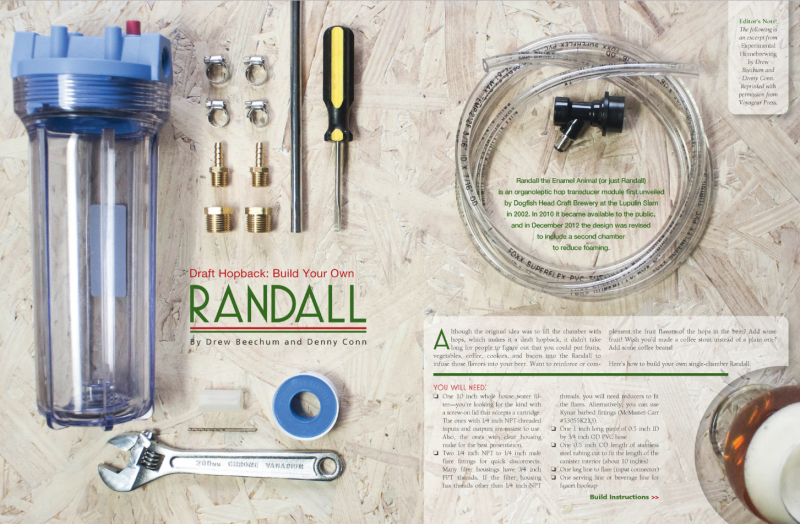
Draft Hopback: Build Your Own Randall – p. 56


Homebrew Con 2014: Grand Rapids, MI

Draft System Design and Maintenance


HomebrewersAssociation.org

A Balancing Act: How to Balance Your Home Draft System

How-to-Balance-Your-Home-Draft-System2


AHA Forum

Home Glycol System

DIY temperature controller


Other Resources

Draft Beer Quality Manual

The post Meeting Topic: Home Draft Systems appeared first on American Homebrewers Association.
Posted on

Texas Legislature Honors Cane Island Alers

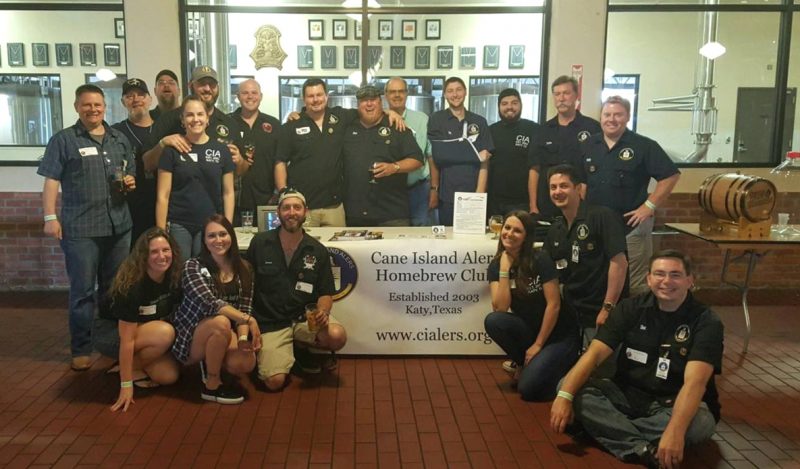
The Cane Island Alers (CIA) is a homebrew club located in the town of Katy, Texas, a suburb that sits just shy of 30 miles (48 km) west of Houston. The club was established in 2003 and has more than 70 members in the Katy area. The Alers are currently leading the Lone Star Circuit, a points-based series of competitions throughout Texas that recognizes the top homebrewers and homebrew clubs in the state every year. The club also added a new accolade to their list of accomplishments in 2017: being honored by the Texas State Legislature for bringing home the 2017 Gambrinus Club Award.

Texas House Resolution 116 was introduced on July 25, 2017, and was sponsored by three members of the 85th House of Representatives of the Texas Legislature: Mike Schofield of District 132, Cecil Bell of District 3, and John Zerwas of District 28. The resolution passed the House on August 16, 2017. CIA president Andy Scherzinger, and club members Durran Dowdle and Eric Worth appeared to receive the honor on behalf of the club, which states in summary: Congratulating the Cane Island Alers of Katy on winning the Gambrinus Club Award from the American Homebrewers Association.

Congratulating the Cane Island Alers of Katy on winning the Gambrinus Club Award from the American Homebrewers Association.

CIA member Ryan DeLaRosa’s “The Olga Milk Stout” won first place in the National Homebrew Competition category 14, Sweet Stout, and fellow club member David Rogers won second place in category 6, Bock, for his “Procrastinator Doppelbock.” Those two medals gave the Cane Island Alers the highest per capita point total of any club in the final round of the competition this year and secured the Gambrinus Award for the Alers.

Rep. Mike Schofield, whose district includes Katy and part of Cypress, congratulated the CIA: “I am proud to honor the achievement of the Cane Island Alers at the largest homebrew competition in the world with House Resolution 116. The resolution is jointly authored by Katy-area Representatives Cecil Bell and John Zerwas. Bringing the Gambrinus Award home is a true testament to their skill, and will add even more depth to the vibrant culture and history of Katy. I have no doubt the Cane Island Alers will continue to bring pride to our community.”

Fellow HR116 co-sponsor Cecil Bell added, “Texas is home to champions and in the forefront of free enterprise and capitalism. The Cane Island Alers represent Texas well. Congratulations on winning the 2017 Gambrinus Club Award!” Rep. Bell’s district includes Waller County and part of Montgomery County.

Both DeLaRoa and Rogers were already accomplished homebrewers before their respective first-place and second-place finishes in the National Homebrew Competition this year. The Olga Milk Stout won DeLaRosa a silver medal at the Port City Plunder homebrew competition in North Carolina earlier this year, in addition to gold medals for his blonde ale, pale ale, and IPA recipes at competitions in Cincinnati, Alamo City, and the CIA’s own Operation Fermentation competition in 2016.

Rogers also has won a number of award-winning homebrews, including a Best of Show at the 2011 Big Batch Brew Bash homebrew competition. It was subsequently brewed in collaboration with Saint Arnold Brewing Company and entered into the Great American Beer Festival ProAm Competition that year as Divine Reserve No. 12 Old Ale.

DeLaRosa got his start homebrewing when he bought his first kit from Katy homebrew shop Texas Homebrewers in April 2014. He joined the Cane Island Alers shortly thereafter and immediately became a self-described “obsessed” homebrewer. He is currently in the planning stages of opening his own brewery in his hometown of Dickinson, Texas, another suburb of Houston.

The club recently began using the shop to host their meetings about once a month, which were previously held at No Label Brewing Co. in Katy.

“In addition to our monthly meetings, we occasionally do ‘brew-ins’ at Texas Homebrewers. During these events we like to encourage people who are on the fence about brewing, or who may just want to increase their brewing knowledge, to come out and ask as many questions as they want. I’m sure I don’t have to tell you that pretty much everyone in the brewing community is friendly and willing to help. We also hold occasional BJCP judging classes for those who may want to join the ranks of the beer judging community,” said DeLaRosa on his involvement with the CIA. “In addition to all of that we’re just a good group of friends and drinking buddies.”

You can find the recipe for Ryan DeLaRosa’s gold medal winning “The Olga Milk Stout” in the September/October 2017 issue of Zymurgy.

The inspiration for David Rogers’ Procrastinator Doppelbock comes from a vacation to Germany several years ago when he and his wife stopped in to the Andechs monastery on the recommendation of a friend who promised a “life-changing experience.” It was here that he was first introduced to a beer that can still be found in his refrigerator year-round, Andechser Dopplebock. Upon returning from vacation, Rogers began designing a clone recipe of the beer since he knew that it would be difficult to find locally. The beer he submitted in this year’s National Homebrew Competition was his third iteration of the recipe.

“My intention was to make a doppelbock that wasn’t too heavily bodied, so I kept the OG down to 1.084. The mash temp was held at 153, my standard temperature for mashing. Only one hop addition was made to get me to about 20 IBU. The wort was boiled for 120 minutes, longer than my typical boil of 90 minutes due to the amount sparged from the large grain bill. I used a 5 L starter of White Labs Bock Lager yeast and let it ferment at 53°F for about a month, after which time I kegged and lagered the beer for four months.” Rogers said of his brewing process, “These beers take a little more time to develop, and if you have the patience, you are rewarded with a great result.

Named for King Gambrinus, the (unofficial) patron saint of beer, the Gambrinus Club Award is awarded every year by the American Homebrewers Association to the club that garners the most points per total club entries in the final round of the National Homebrew Competition. Six points are awarded for every gold medal, four points for every silver, and two points for every bronze medal in each style category. The award was presented to the Cane Island Alers during the NHC Awards Ceremony at Homebrew Con 2017 in Minneapolis.

The post Texas Legislature Honors Cane Island Alers appeared first on American Homebrewers Association.

Posted on

Homebrew Con Panel: Building Great Homebrew Clubs

In this recording of a panel discussion from Homebrew Con 2017 in Minneapolis, MN, representatives from three former Radegast Award–winning homebrew clubs—the Carolina Brewmasters, Maltose Falcons, and the Hogtown Brewers—discuss what makes great homebrew clubs. Expect to learn new, exciting ways to engage your membership and take club events to the next level.

To view all Homebrew Con seminar recordings, visit the Conference Seminars section of Let’s Brew on the AHA website.

About our panelists

Drew Beechum has been brewing and writing about brewing since he picked up a kettle in 1999. He is author of The Everything Homebrewing Book, The Everything Hard Cider Book, and The Homebrewer’s Journal, and co-author of Experimental Homebrewing and Homebrew All-Stars. Beechum has written for Zymurgy and Beer Advocate, and he is co-host of the Experimental Brewing podcast. He lives in Pasadena, Calif., with his lovely wife and a loyal army of dogs and cats.

Jason Randall been a member of the Carolina Brewmasters since 1999. He directed the club’s Charlotte Oktoberfest craft beer festival three times and has helped organize the festival, which supports charitable organizations in Charlotte, many other years. Jason has held the offices of treasurer, vice-president, and VP of membership and currently serves as an at-large board member. He began brewing in 1989 and brews all styles of beer using a RIMS keggle system.

Ron Minkoff has been homebrewing in the comfort of his driveway since 2003. For three years he was president of the Hogtown Brewers, the 2016 Radegast Homebrew Club of the Year. He is a BJCP Certified judge who enjoys brewing the occasional seasonal and one-off recipe at Gainesville’s local commercial breweries, one of which was an entrant in the GABF Pro-Am in 2016. He has co-hosted Grow Radio’s Homebrew Talk podcast since 2010, where along with co-host partner John, First Magnitude Brewing Company‘s co-owner, they spread the homebrew gospel one carboy at a time.

Martin Brungard [Moderator] is chairman of the AHA’s Club Support subcommittee, which compiles and develops ideas and content to help homebrew clubs flourish. He is an officer for the Foam Blowers of Indiana and a former member of the North Florida Brewers League. He also regularly contributes to the collective body of brewing knowledge with information on water chemistry and treatment.

The post Homebrew Con Panel: Building Great Homebrew Clubs appeared first on American Homebrewers Association.

Posted on

Zymurgy Rewind: Incorporating a Homebrew Club

In Zymurgy Spring 1995 (Vol. 18, No. 1) “Club News,” we learned that clubs may apply for not-for-profit status through the Internal Revenue Service. Once clubs are established as not-for-profits, they are considered tax-exempt and are able to make money (tax-free) for club events as well as accept tax-deductible donations. Clubs may also choose to become incorporated not-for-profit entities. Here’s the story of how one club became incorporated.

Our road to incorporation began more than a year ago when the board of directors became increasingly concerned about liability at club events. In addition to providing a forum for local homebrewers, Paumanok United Brewers Inc. (PUB) sponsors pub crawls, bus trips to microbreweries, a summer beer picnic, and our flagship event, the Northeast Craft Brewers’ Festival. Because alcohol is involved in all of these events, the board and I, as president, decided that some form of protection was needed.

Alcohol liability insurance available to all homebrew clubs, though it can be prohibitively expensive. We made extensive inquiries and came up empty-handed. To give an example of the cost, a one-day policy for our Craft Brewers’ Festival cost more than $1,200 and did not even cover alcohol liability, just general liability. Insurance companies are reluctant to write these types of policies, particularly when they learn what a homebrew club does. (Editor’s note: The American Homebrewers Association now partners with a leading insurer to offer affordable club insurance)

On the advice of several attorneys, our next-best course of action was to incorporate and take out a general liability policy for the officers and directors. Generally, a corporation provides a layer of insulation to the officers, directors, and members against being sued individually. Keep in mind that the corporation can be sued, but members, officers, and directors cannot be sued individually, except in extreme cases such as gross negligence, or if a board member or officer acts as an individual and not on behalf of the club. Incorporation is not a substitute for good insurance and judgement, but rather a supplement.

The steps to incorporation differ on a state-by-state basis. However, if your club is interested in pursuing incorporation, a few basic steps are usually similar. First, a club member should contact your state’s Secretary of State or equivalent. This office can advise which forms are needed for that state’s process of incorporation. Second, as there are different types of incorporations, it would be useful to contact an attorney to determine what type of incorporation the club wants to pursue. In PUB’s case we are a domestic, not-for-profit incorporation, Type A, under Section 402 of the New York State Charter.

Because PUB Inc. incorporated as a not-for-profit corporation in the state of New York, we are subject to the provisions in Internal Revenue Service Code Section 501(c)(7). This section deals with membership corporations, which is the closest fit for a homebrew club. Since PUB’s purpose is to promote a better understanding of the joys of homebrewing (an educational role), we decided to incorporate as not-for-profit. Applicable restrictions and regulations vary by state.

Aside from a shield against personal liability for the officers and directors, incorporating as a not-for-profit corporation instead of a regular corporation enables the organization to apply to the IRS and State for letter rulings on not-for-profit status. If approved, the not-for-profit corporation need not file income tax forms if the source of all revenues is from membership dues and/or permitted fund-raising activities, and if total revenues do not exceed $25,000 per year. If total revenues exceed $25,000 per year and/or the source of revenues is not exclusively from membership dues and/or permitted fund-raising activites, then IRS Form 990 must be filed and any applicable taxes must be paid.

If approval is not given, then the corporation must file the appropriate Federal and State Corporate Income Tax Forms and pay all applicable taxes. (Note: after IRS approval, the corporation must apply for State approval). We are awaiting our letter ruling, which could take months. The form to request the ruling is a 25-page document, Package 1024, that asks everything except the officers’ shoe sizes! Our next step is to acquire officers’ and directors’ liability insurance as an additional layer of protection.

On a more mundane level, being a not-for-profit corporation gives the homebrew club more respectability and credibility—many banks offer free checking accounts to such organizations. The downsides to being a corporation are that much more record-keeping is involved, the process itself is time-consuming and expensive ($500 to $1,000 depending on legal fees and state filing requirements), minutes must be taken at member and board meetings, and all requirements and regulations of the not-for-profit law must be strictly followed. In essence, a corporation imposes a certain degree of formality and rigidity on the homebrew club, which can be at odds with the original intent of the organization (it’s no longer possible to simply “relax, don’t worry, and have a homebrew.”)

The detailed regulations that govern not-for-profits are beyond the scope of this article, but simply stated, a not-for-profit corporation may not distribute any of its net earnings to members, directors, officers, trustees or any other individual (except reasonable compensation for services and goods). It is strongly recommended that any club considering incorporation consult with an attorney who can explain the various types of corporations and the myriad restrictions and regulations.

Incorporating may not be for every club, but our club decided that it was a necessary evil. Even with the growing pains, it was the right choice for us.

Marc Arkind is the president of Paumanok United Brewers Inc., Long Island’s largest homebrew club and the president of Alpine Computer Technologies Inc., a Long Island-based computer consulting firm. Marc has been an avid homebrewer for eight years; his interest in homebrewing is an offshoot of his passion for cooking. Marc is also a Certified BJCP judge.

The post Zymurgy Rewind: Incorporating a Homebrew Club appeared first on American Homebrewers Association.

Posted on

Coriandered Mild Brown Ale

A step infusion mash is employed to mash the grains. Add 7 quarts (6.7 L) of 140°F (60°C) water to the crushed grain, stir, stabilize, and hold the temperature at 132°F (53°C) for 30 minutes. Add 3.5 quarts (3.3. L) of boiling water to raise the temperature to 155°F (68°C) and hold for about 30 minutes. Raise temperature to 167°F (75°C), lauter, and sparge with 3.5 gallons (13.5 L) of 170°F (77°C) water. Collect about 5.5 gallons (21 L) of runoff. Add 60-minute hops and bring to a full and vigorous boil.

Once you’ve added all of the hop additions, you’ll want to add 0.75 oz. (21 g) of crushed coriander seed with 1 minute remaining. After a total wort boil of 60 minutes, turn off the heat and place the pot (with cover on) in a running cold-water bath for 30 minutes. Strain and sparge the wort into a sanitized fermenter. Bring the total volume to 5 gallons (19 L) with additional cold water if necessary.

Pitch the yeast when the wort temperature is about 70°F (21°C). Ferment at about 70°F (21°C) for one week or until fermentation shows signs of calm and stopping. Rack from primary to secondary and add the remaining 0.5 oz. (14 g) crushed coriander seed. If you have the capability, “cellar” the beer at about 55°F (12.5°C) for one week.

The post Coriandered Mild Brown Ale appeared first on American Homebrewers Association.